Sunday, September 1, 2013

The Star System


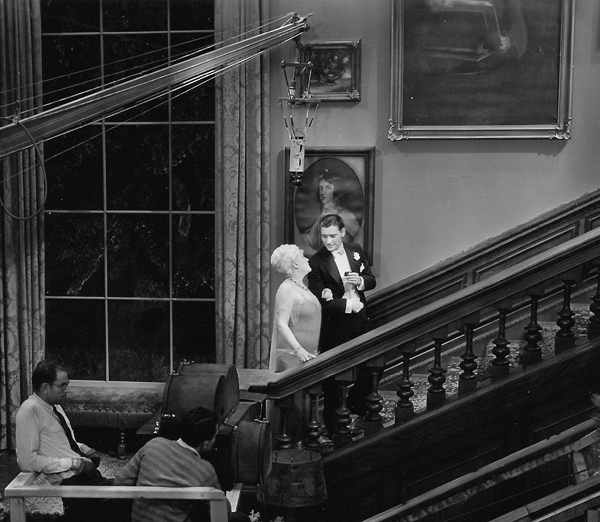
The Star System is the most famous part in The Studio System. Movie stars on the late 1920's to early 1960's were managed and promoted by Hollywood studios. They create the stars persona to be famous in the US and they were often glamorized by the studio. The Star System emphasizes on the movie stars' image rather than the acting. They will build and create an image on the actor/actress but in real life, it doesn't have any connection with their true personality. Anyone with a beautiful, promising and attractive face can have a chance to be a discovered and be a movie star.

The actors and actresses always have to maintain their wholesome image. They should act properly and avoid indiscretions that would ruin their image and career. But for some stars who had drinking problems, drug addiction, committed adultery, and may more, their gossips and issues were covered by money to protect their image.


some information are based from http://classichollywoodcentral.com/?p=223

Saturday, August 31, 2013

Reflection on Un Chien Andalou


This is an example of a Surrealist film. Un Chien Andalou is a silent film by Luis Buñel. A Surrealist film again is an anti-narrative which means it's story is not linear but diverse and the following scenes are very unexpected in short, it is confusing.

When I watched this short film, I actually don't understand the whole story. It was bizarre and the scenes were like random with no proper sequence of events.I remembered when Luis Buñel slit the woman's eyes, I  honestly can't take to watch it without blinking my eyes.

The film started with a man riding on a bicycle. He was carrying a box with him. Suddenly, he went unbalanced then fall down on the road and hit his head on the concrete cement. A woman heard that, I think because she went down to see him. I think the woman was the main character in the story. Then the next scene, she was with another man with ants on his hand. I don't get the sequence of this story. They were both in a hotel room (I think it was a hotel room). And the following scene they heard a commotion outside. There was a hand on the street and another young woman was there moving it. I think the one who owns the hand was important to her. An officer picked up the hand and gave it to her. The main characters, which are the man and woman in the hotel room watched over her. The young woman was out of her mind. She was hit by a car and the man and woman in the hotel room witnessed the accident. The man was happy then suddenly, he touched the woman's breast. They fought because the woman didn't like what the man was doing to her. Then, the man pulled something. I was surprised to see two dead animals (which I think are horses) at the top of the two grand pianos and another two men tied together.After that, the main character (the man) came in again and fought with the man from the first scene (he was the one with the box I think). The man from the first scene shot the man and he died. The location changed and it was in the forest. Then the woman went with another man again and the scene was on the beach.

The film was very unpredictable because it has many scenes. I thought it was a bit confusing. I can't even identify which is the imagination and which is the reality. But it was a good film though.


Thursday, August 29, 2013

What's Surrealism?


       Surrealism is different from Impressionism. Unlike Impressionist films that were first made for commercial purposes, surrealist films were shown for private viewing for small gatherings. The most famous surrealist was Luis Buñuel. He worked for surrealist style for 50 years.

          Surrealism is anti-narrative meaning; its story is not linear where in you can’t tell what will likely happen for the next scenes. One example is Un Chien Andalou by Luis Buñuel. Causality or the connection of cause and effect is absent in Surrealist films. Like in one’s dream, you cannot identify the flow of the story or what is happening because there is no connection of cause and effect in it.

            The dreams, desires, and hallucinations of one character are dominant here. In fact it shows sexual desire, ecstasy, violence, blasphemy, and bizarre humor. Its style is eclectic or diverse. According to the FIlm Art by David Bordwell and Kirsten Thompson, many surrealsit films tease us to find la narrative logic in Surrealist films but they are simply absent. Its style is broad and its editing is a combination of some Impressionist devices. To sum it all up, Surrealism shows us an "undirected play of thought" which means the logic in the films are absent. Surrealism only lasted on 1930's.

Tuesday, August 27, 2013

German Expressionism


          At first, the German film industry was insignificant. It was never popular among other countries in the film industry. German theatres were not even showing German films but instead American, French, Danish, and Italian films. German films soon were barred by America and France from their theatres, and because they weren’t powerful enough, they cannot ban them in return. But this was all after the World War I. Things became different when the German government finally supported the film industry.

      German Expressionism emerged during the 1920s when it coproduced with companies in other countries. Drama and comedy were the typical film genre that is why German films concentrated on only three genres which are adventure, detectives, and exotic settings. German films kept on improving in spite of the judgements of other countries. Until Ernst Lubitsch’s Madame Dubarry became popular not just in Germany but also in the United States. Lubitsch became the first German director to be hired in Hollywood.

        Expressionism was also an avant-garde movement and it has been significant first on painting, then practiced on theater, then later on in literature and architecture. Company officials decided then to try Expressionism in cinema. They believed that it might be a selling point in the international market.

        This was justified when The Cabinet of Dr. Caligari made a success. Because of this, by the mid 1920's, Germany's avant-garde directors continued to make abstract films and  they were widely regarded as among the best in the world.

     Unlike French Impressionism, which bases its style on cinematography and editing, German Expressionism depends heavily on the mise-en-scene. Distortion and exaggeration are often made to express the story. The actors wear heavy make-up and move in a jerky way. As the Expressionism was accepted as a style, it often function to portray horror, fantasy, or historical epics.

            Soon, German Expressionism took its immediate downfall. Because of this on 1924, they began to imitate the  Hollywood style. The result of the films even though sometimes impressive, weakened distinct qualities of Expressionist style.  Although German Expressionism only lasted for seven years, it's influence in the film industry never died out and it will be forever in the history of film making.

The French Impressionism


           French Impressionism according to the Film Art by David Bordwell and Kirsten Thompson was an avant-garde style that operated largely inside the film industry. 

          World War I had a bad impact on the French film industry. On 1915, American films began to rise in France and soon, by the end of 1917 Hollywood cinema took over the market. After the war, the French film industry had never recovered and most films that were shown were American films. Because of this the French film industry tried to recover and recapture the market so they imitated Hollywood film style. As a result, it encouraged the younger French directors to view cinema as an art similar to poetry, painting, and movie rather than a commercial craft. 

         The younger directors experimented on cinema. They centred on emotion, which is usually about a love triangle. This has become their basis for exploring brief moods and shifting sensation in filmmaking. They patterned it all to the Hollywood style. 

          Impressionist films were giving the story a psychological depth and revealing the role of a character’s consciousness. So it emphasizes more on the personal emotions. It controls plot time and subjectivity. Flashbacks are also common to impressionist films to show memories. Another important thing is that it portrays the character’s dreams, fantasies, and mental states. 

         The smiling Mme. Beudet by Dulac in 1923 contains almost the main character’s fantasy life and her imaginary escape from dull marriage. 

      Filmmakers made an experiment on the cinematography and editing to show mental states or the character’s thoughts and feelings. As in La Roue, Norma’s image is covered with smoke from an engine, representing the fantasy of the engine driver, who is in love with her. To even more exaggerate the subjectivity, the impressionist cinematography and editing presented the character’s point of view. An example of this is L’ Herbier’s El Dorado in 1920. There is s scene here where a man was drinking in a cabaret. To show the atmosphere, a distorted or dizzying camera movement was made to portray how the man was feeling.

          French Impressionism may have ended on 1929. But its influences of the Impressionist form which are the psychological narrative, subjective camera work and editing will be forever in the history of the film industry as it influenced the Hollywood style mainly on horror films and film noirs.

Back to the Future Trilogy


          Hi readers!!! Tell you what; have you ever watched this movie? Well if not, GO WATCH IT NOW. This is a super cool sci-fi movie directed by Robert Zemeckis in 1985. I’m sure you’ll enjoy the three back to back episodes of it!

         Back to the Future is an adventure, comedy, sci-fi film in 1985. It was directed by Robert Zemeckis and was produced by Steven Spielberg. In 1986 the movie won the Oscar Award for best effects and sound effects editing and was nominated for best music and original song, best sound and best writing and screenplay written directly for the screen.

         I’ve watched this a long time ago but until now, I still keep on watching it over and over again. It was one of my all-time favourite sci-fi movies. I really love the adventures of Marty McFly. I can relate to him because I am too an adventurer. I enjoyed every part of it especially the ending part of the first instalment. The story was hanging and all you can do is to wait, be curious and eager to know what happened next.

        Marty McFly was the main character in the movie. He has a friend, Dr. Emmett Brown who’s an inventor and a scientist. Dr. Emmett Brown invented a time machine. One night, after finishing his greatest invention he brought the time machine outside, which is the car, for a test drive and Marty was with him. They videoed the invention for documentation but when they were about to finish, some Libyan terrorists arrived in a van and shot him. They were the owner of the plutonium, a nuclear thing used for the car’s engine that Dr. Emmett has stolen. Marty panicked so he went inside the time machine and drove it fast not noticing that it was set to a another time space in the past. And that started his great adventure.

         As to the movie’s cinematography and lighting, all I can say is that it was great. The shots were good that it directs the attention of the viewers into the important parts. The lighting also was good for it shows the right mood for every scene. The music/sound effects were excellent. I mean, it really suits the theme of the story. Like if the scene is suspense, dramatic, or comedic, it shows.

Monday, August 26, 2013

The Classical Hollywood Style


David Bordwell, Janet Staiger and Kristin Thompson coined the term classical Hollywood cinema. They came to the conclusion that during this period a distinctive cinematic style developed that they called classical Hollywood style. Moreover they claimed that this style has become typical because of the global dominance of Hollywood cinema.

        The most important elements of the classical Hollywood style are narrative, editing, cinematic space and time, and summary.


        Let us now discuss the first element. According to Michael Goldberg, classical Hollywood cinema’s narrative follows building blocks that are part of most Western narratives such as events, actors and agents, linear chains of cause and effect, main point and secondary points. It is also clearly structured with the visible beginning, middle, and end. He also stated that it generally provides a comprehensive resolution at the end and that the character’s goals are usually psychologically rather than socially motivated.

Second, is editing which is the single most important and most influential element of cinematic form that characterizes classical Hollywood cinema. The most important goal of continuity editing is to make the cut invisible by devices such as the shot / reverse-shot or the eye line match.

Third is the cinematic space and time which are constructed in cinema. They are unified, continuous and linear to match our perception of time and space in reality.

Lastly, summary which is the unifying force behind the classical Hollywood style is motivation and conventions. In the development of the narrative every event is motivated. In the same way the use of cinematic style is generally motivated by the narrative. The connection between narrative and cinematic style is highly conventional.


        Hollywood cinema has changed as of this present time and we can notice many changes from the previous Hollywood style up to now. But still, the classics from the past will still remain as the foundation of the great films made from today and it’ll also be the most important part of Hollywood’s filmmaking history even though modernization has taken place. 

Powered By Blogger